What Happens to Solar Panels on Cloudy Days?
Solar panels still produce electricity on cloudy days, just at reduced levels. Learn how weather affects solar output and why clouds are not a dealbreaker.
Solar Panels Work on Cloudy Days
One of the most persistent myths about solar energy is that panels do not work on cloudy days. The truth is that solar panels produce electricity whenever there is daylight, including overcast and cloudy conditions. Clouds reduce output, but they do not eliminate it.
Understanding how weather affects solar production helps set realistic expectations and shows why solar works effectively in every U.S. state, even famously cloudy ones like Washington and Ohio.
How Much Do Clouds Reduce Solar Output?
The impact depends on the type and thickness of cloud cover:
Light or Thin Clouds
Thin, wispy clouds or light overcast conditions reduce solar output by only 10 to 25 percent. Some scattered cloud conditions can actually boost production momentarily through an effect called cloud edge enhancement, where sunlight refracting around cloud edges briefly intensifies irradiance beyond clear-sky levels.
Moderate Overcast
A consistent layer of moderate clouds reduces production by 25 to 50 percent. Your panels still generate meaningful electricity, just less than on a clear day. A system that produces 30 kWh on a sunny day might produce 15 to 22 kWh under moderate clouds.
Heavy Overcast or Storm Clouds
Thick, dark storm clouds reduce output by 60 to 80 percent. Even in a driving rainstorm, some diffuse light reaches your panels. A system might produce 6 to 12 kWh on such a day instead of 30 kWh.
Fog
Morning fog, common in coastal areas, typically burns off by midday. The impact on daily production is usually modest, reducing output by 10 to 20 percent for the day. Once the fog clears, panels resume full production.
Why Cloudy Climates Still Work for Solar
Annual Production Is What Matters
Solar systems are designed based on annual energy production, not daily output. A few cloudy days or even a cloudy month is already factored into your system design. Solar installers use historical weather data specific to your location to predict annual output with impressive accuracy, typically within 5 percent.
The Proof: Germany and the Pacific Northwest
Germany receives about the same amount of sunlight as Alaska, yet it has been one of the world's top solar-producing countries for over a decade. Seattle, one of the cloudiest cities in America, has seen explosive solar growth because even there, panels produce enough electricity to deliver strong financial returns.
Portland, Oregon, receives an average of 4.0 peak sun hours per day and still supports a thriving solar market. Homes in Portland typically see payback periods of 8 to 9 years, well within the 25-year system lifespan.
Higher Electricity Rates Compensate
Many cloudy regions have higher-than-average electricity rates. The Pacific Northwest, Northeast, and Midwest all tend to have above-average utility prices. Higher rates mean each kWh of solar electricity is worth more, offsetting the lower production in cloudy conditions.
For example, a home in Massachusetts (3.8 peak sun hours, $0.26/kWh) often has a shorter solar payback period than a home in Nevada (6.2 peak sun hours, $0.12/kWh) because the electricity rate difference more than compensates for the sunlight difference.
How Modern Technology Handles Clouds
Microinverters and Panel-Level Optimization
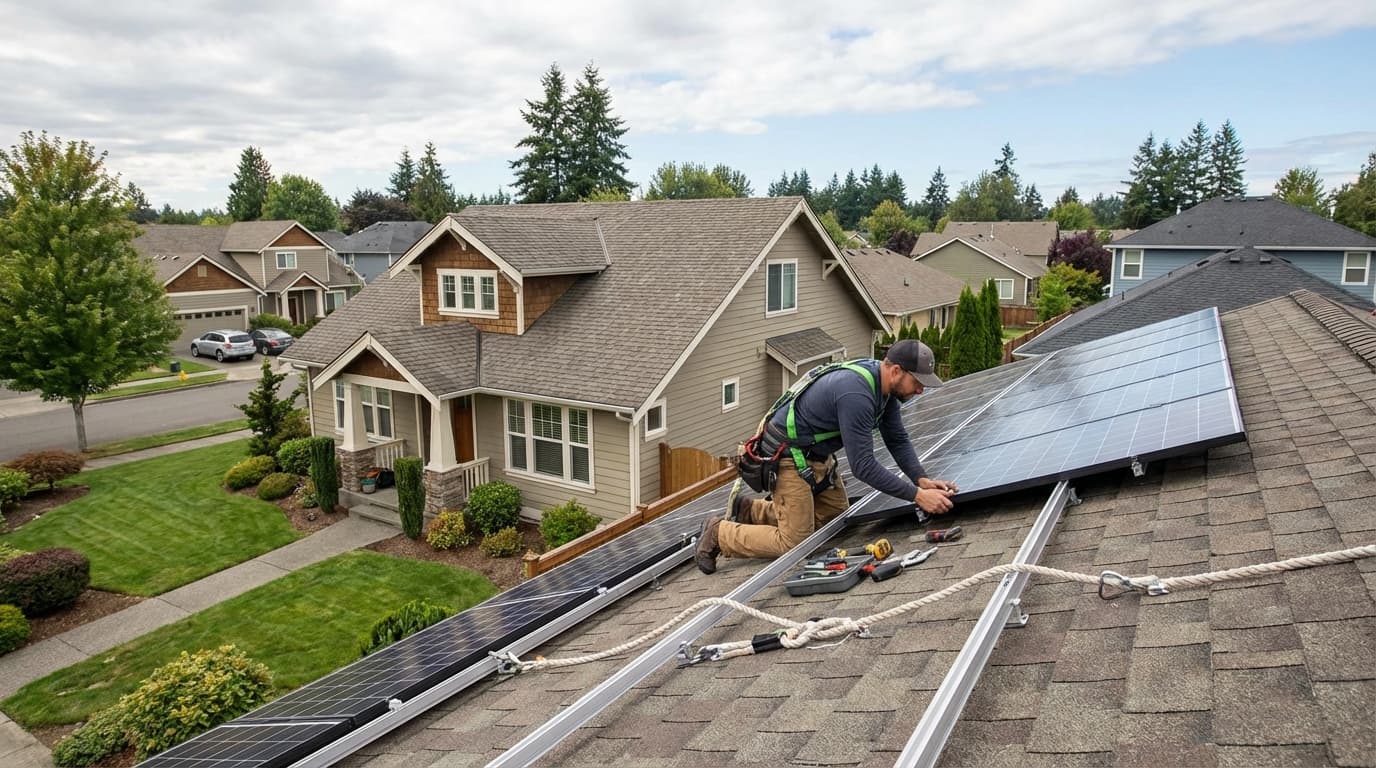
Traditional string inverter systems are affected by partial shading and uneven cloud patterns because all panels in a string are limited by the weakest performer. Microinverters and power optimizers solve this by allowing each panel to operate independently. If one panel is in shadow while others are in sunlight, the shaded panel does not drag down the rest.
Bifacial Panels
Bifacial solar panels capture light on both their front and back surfaces. On cloudy days, diffuse light scattered by clouds comes from all directions, and bifacial panels can capture reflected light from the ground and surroundings, boosting cloudy-day production by 5 to 15 percent compared to standard panels.
Advanced Cell Technology
Modern panel technologies like heterojunction (HJT) and TOPCon cells have better low-light performance than older cell designs. These panels convert a wider spectrum of light more efficiently, improving production during overcast conditions.
Seasonal Variations in Solar Production
Solar production varies by season, which is largely driven by daylight hours and sun angle rather than cloud cover alone:
An important point: solar panels are more efficient in cold weather. The electrical resistance of silicon decreases as temperature drops, so a 40-degree sunny winter day can produce nearly as much per hour of sunlight as a 90-degree summer day.
Planning for Weather in Your Solar Design
When your installer designs your system, they use historical irradiance data for your specific location. This data already accounts for average cloud cover, fog, rain, and snow days throughout the year. The production estimate you receive with your quote reflects real-world conditions, not theoretical sunny-day maximums.
If you live in a cloudy area, your installer may recommend slightly oversizing your system to ensure you generate enough electricity annually to cover your usage.
The Bottom Line
Clouds reduce solar production, but they do not stop it. Solar panels work in every climate across the United States, and the financial case for solar remains strong even in the cloudiest regions. Do not let weather concerns hold you back from exploring solar.
Get a free, location-specific solar quote through SmartEnergyUSA to see exactly how much your home can produce based on your local weather patterns.