Understanding Your Solar Panel Warranty
Solar panel warranties can be confusing. Learn about product warranties, performance guarantees, inverter coverage, and what to look for before buying.
Why Solar Warranties Matter
Solar panels are a 25- to 30-year investment, so the warranty backing them is critical. A strong warranty protects you against manufacturing defects, premature degradation, and unexpected failures. Understanding the different types of warranties helps you compare products and avoid costly surprises.
Types of Solar Panel Warranties
Product Warranty (Workmanship Warranty)
The product warranty covers manufacturing defects, material failures, and premature breakdowns. If your panel stops working due to a defective solder joint, delamination, cracked glass, or faulty junction box, the product warranty covers repair or replacement.
Industry standard: 12 to 15 years for most manufacturers. Premium brands like SunPower, REC, and Panasonic offer 25-year product warranties, and SunPower now offers 40 years.
Performance Warranty (Power Output Guarantee)
The performance warranty guarantees that your panels will produce a minimum percentage of their rated power output over time. All solar panels gradually lose efficiency, a process called degradation. The performance warranty sets a floor on how much degradation is acceptable.
Industry standard: Most manufacturers guarantee 80 to 85 percent of rated output at year 25. Premium brands guarantee 87 to 92 percent.
A typical performance warranty looks like this:
Linear performance warranties, which guarantee a specific output level every single year rather than just at the end, are increasingly common and preferable because they protect you against accelerated degradation at any point during the warranty period.
Inverter Warranties
Your inverter is the component most likely to need replacement during the life of your solar system. Warranty coverage varies significantly by inverter type:
String Inverters
Central string inverters from companies like SolarEdge and SMA typically come with 12-year warranties, extendable to 20 or 25 years for an additional cost of $200 to $500. Since the inverter costs $1,500 to $2,500 to replace, the warranty extension is often worthwhile.
Microinverters
Enphase microinverters come with a standard 25-year warranty, matching the expected lifespan of the panels themselves. This is a significant advantage, as you never need to worry about replacing the inverter during the system's life.
Power Optimizers
SolarEdge power optimizers, which pair with a central inverter, carry a 25-year warranty. The central inverter itself has a 12-year warranty, extendable to 25 years.
Installer Workmanship Warranty
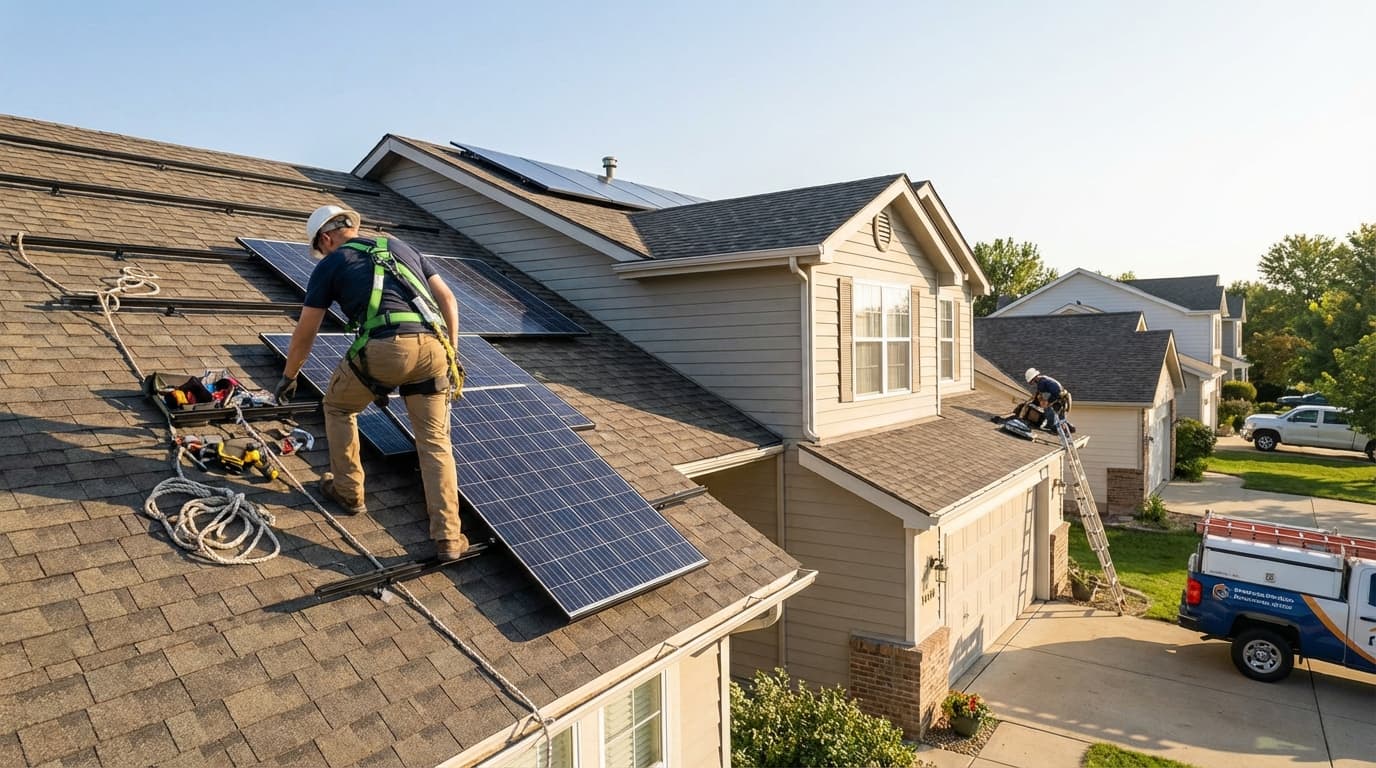
Separate from equipment warranties, your solar installer should provide a workmanship warranty covering the quality of the installation itself. This covers issues like roof leaks at mounting points, faulty wiring, and improper panel placement.
What to look for: A minimum 10-year workmanship warranty. Top installers offer 15 to 25 years. Be wary of installers offering less than 10 years or no workmanship warranty at all.
Important consideration: An installer workmanship warranty is only as good as the company standing behind it. Choose an established installer with a strong track record. If the company goes out of business, the warranty goes with it.
What Voids a Solar Panel Warranty
Understanding what can void your warranty prevents costly mistakes:
How to File a Warranty Claim
Step 1: Document the Issue
Take photos and record the specific symptoms. Note which panels or components are affected, the dates you noticed the problem, and any monitoring data showing reduced performance.
Step 2: Contact the Right Party
For equipment defects, contact the panel or inverter manufacturer directly. For installation issues like roof leaks, contact your installer. Keep copies of your contract, invoices, and warranty documents.
Step 3: Manufacturer Assessment
The manufacturer may request monitoring data, ask for a site inspection, or have you perform basic troubleshooting. For performance warranty claims, they typically need production data compared to expected output for your location.
Step 4: Resolution
If your claim is approved, the manufacturer will ship replacement equipment. Labor costs for the replacement may or may not be covered, depending on the warranty terms. Some manufacturers cover labor; others cover only the equipment.
Warranty Comparison: Top Brands
| Brand | Product Warranty | Performance at Year 25 | Type |
|-------|-----------------|----------------------|------|
| SunPower | 40 years | 88.25% | Linear |
| REC | 25 years | 92% | Linear |
| Panasonic | 25 years | 86% | Linear |
| Canadian Solar | 25 years | 84.8% | Linear |
| QCells | 25 years | 86% | Linear |
| LONGi | 25 years | 84.8% | Linear |
Tips for Protecting Your Investment
SmartEnergyUSA partners with installers who carry quality equipment from reputable manufacturers. Get a free quote and compare warranty terms alongside pricing and performance to make the best decision for your home.